A small service team rarely needs another place to store a task title. It needs a shared understanding of who has the work, what is waiting on someone else, and whether the customer has received an acceptable result. A SuperTasks.com workspace could focus on that gap, beginning with teams that repeat a recognizable client workflow every week.
This is an illustrative business concept for a buyer of the domain. The first customer might be a five-person marketing studio with several ongoing accounts. The product would help an account manager move a weekly client update from request to review to delivery. That is a specific enough job to observe, prototype, and discuss with a potential customer.
Choose one recurring handoff
Start by watching how a weekly update happens today. An account manager asks for results, a specialist supplies numbers, someone adds context, and a client lead reviews the final message. The useful discovery question is where work stalls. It may be missing inputs, unclear ownership, an unanswered question, or a reviewer who did not know a draft was ready.
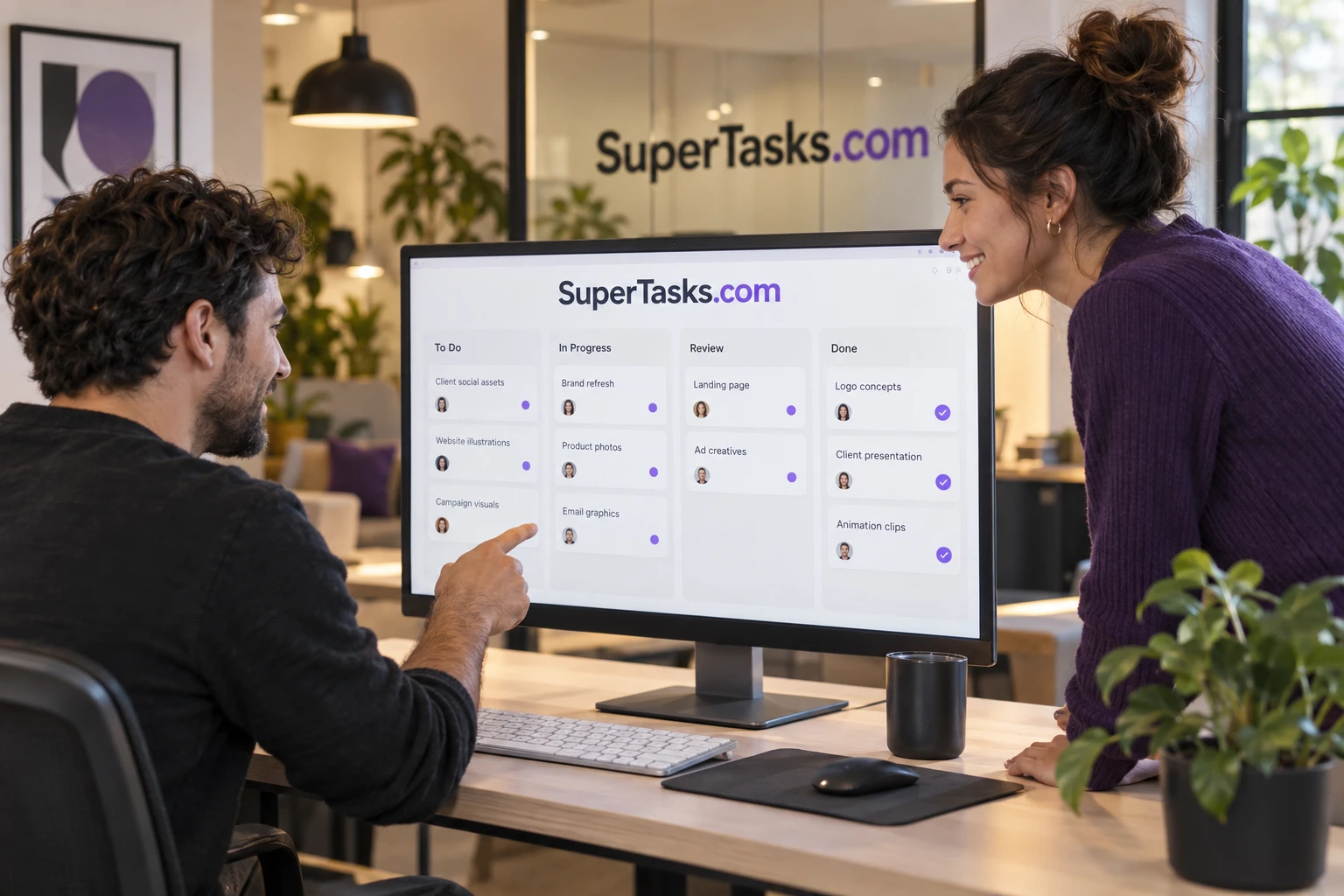
A first prototype could show one task with an owner, an expected result, a due date, and a next reviewer. A short checklist would describe the inputs needed for this particular deliverable. The interface should make a blocked task visibly different from work that is ready for review. Avoid beginning with a large menu of project methodologies. The initial customer should recognize their own week in the demonstration.
Treat acceptance as a separate step
A task can be technically finished while the result still needs review. For the weekly update, the specialist may have supplied accurate figures, but the account manager still needs to explain what changed. Design separate states for in progress, blocked, ready for review, and accepted. The state names should match the team's language rather than require a new vocabulary.
The reviewer needs enough context to make a decision without reconstructing the request. Show the original brief, the submitted result, and any unresolved question together. A returned task should include a reason and a clear next action. The purpose is to reduce another round of conversation, rather than to create a record that merely says someone rejected the work.
Make recurring work a deliberate product feature
Recurring tasks need more than a duplicate button. The next occurrence may need a fresh owner check, a new date range, and links to current inputs. A useful template can carry the stable instructions while leaving changing details visible. The user should be able to correct a single occurrence without accidentally changing every future task.
Existing tools provide useful reference points. Asana's official documentation describes rules through triggers and actions. That is a helpful way to think about a narrow handoff, such as notifying a reviewer when a task becomes ready. Study the mechanism, then decide which single action the target team actually needs. A new product should earn its place by solving a specific frustration better for its chosen customer.
Keep the first offer small enough to explain
An initial offer might be a shared workspace for weekly client deliverables, sold to small agencies with recurring accounts. The demonstration would show a complete cycle in a few minutes. Pricing could be tested around active teams or client workspaces, but the buyer should interview customers before selecting a model. A price that looks simple on a page may be confusing when a team handles seasonal clients.
Onboarding should begin with one existing workflow. Help the customer choose a real deliverable, identify the owner and reviewer, and bring in the minimum necessary information. Importing years of task history is unlikely to be the first source of value. A successful first week produces a result that the customer was already responsible for delivering.
Reach teams through the problem they recognize
Early distribution could begin with agency operators, account management communities, and consultants who help small teams organize client work. A useful piece of content would walk through a weekly update handoff with an editable example. It should make sense even to someone who never signs up. That gives a prospect a fair view of the founder's understanding of the work.
Recruit a small group willing to test one cycle. Ask them to compare the workflow with their current approach and point out where the new workspace creates extra steps. Track whether owners know what to do, reviewers receive enough context, and the final deliverable reaches its destination. Those observations are more useful at this stage than a large registration count.
Add AI where the job supports it
AI could help summarize task discussion or turn an incoming request into a proposed brief. Keep the proposal editable and show what information it used. A person should confirm ownership, deadlines, and customer commitments before they become part of the work. The workspace's first responsibility is a dependable shared record; a polished summary that changes the meaning of a request would weaken that record.
As building such features becomes easier, the brand needs to stand for a recognizable experience. SuperTasks.com could connect a practical guide, a product demonstration, and a customer's recommendation. The durable relationship would come from understanding the team's work and responding well when the product gets something wrong. The domain is a major online brand component, while delivery gives it meaning.
A useful next step
Prototype one weekly client workflow with a team you can observe. Use a small number of states and one clear review handoff. Run a real cycle, record the questions people ask, and revise the parts that force them back into private messages. Only then decide what deserves to become software. A useful first signal is a team that can explain how the workflow helped them finish a real commitment.